5 Things to Know About the Fortnite Reload Zero to Unreal Grind
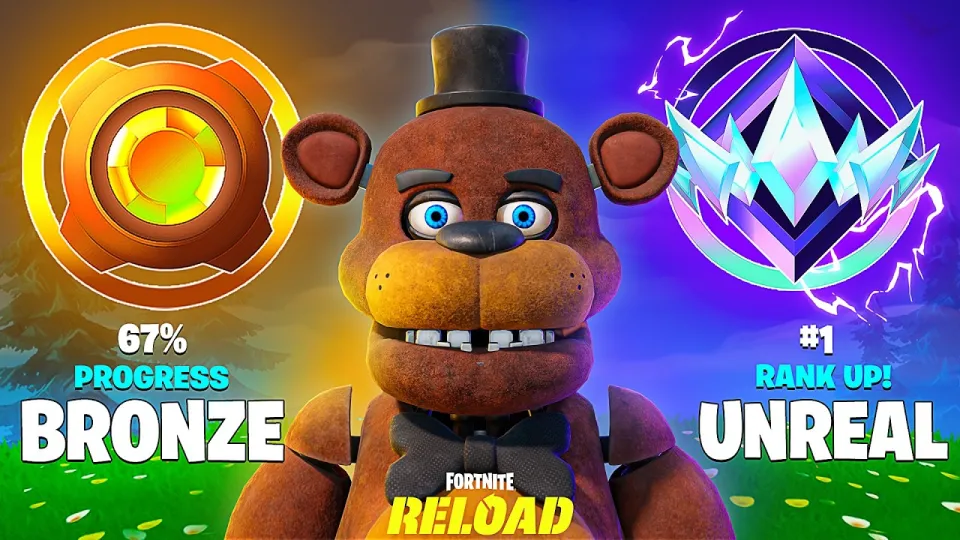
Video: I Played 24 HOURS for UNREAL! (Reload Speedrun on Day 1)
Need articles like this for your video? They help promote it on YouTube and Google — order them in the Telegram bot @sat_sit_bot. The bot writes and publishes the articles itself (with your YouTube video embedded) on popular topical websites (no ads). Free trial — 50 articles.
Fortnite Reload's ranked ladder resets at the start of each season, sending every player back to the bottom, and climbing from zero to Unreal in a single session is the benchmark content creators use to prove a grind. The format rewards fast, aggressive play: shorter matches, respawns while teammates are alive, and placement points that stack quickly when you win. TG Plays documented exactly that push on day one of the reset, and players who want to follow the same route can start with the creator's Fortnite island hub at TypicalGamer's Fortnite profile, where new maps and codes go live first.
How the Fortnite Reload ranked climb is structured
Reload's ranked mode uses the same tier ladder as the main Battle Royale but compresses the time between games, so progress per hour is much higher. The tiers run Bronze, Silver, Gold, Platinum, Diamond, Elite, Champion and Unreal, and each tier below Elite is split into sub-divisions that require a set number of rank points to clear. Points come from two sources: placement and eliminations, with placement weighted heavily in the top five. Because Reload matches are short and respawns keep squads alive longer, a strong player can bank points from several games in the time a standard Battle Royale match would take. The catch is that rank points are also deducted for early exits, so a hot drop that goes wrong costs real progress.
What a zero-to-Unreal session actually demands
A 24-hour push is less about raw playtime than about consistency across roughly a hundred matches. The practical requirements look like this:
- Win rate matters more than kill count. A player who finishes top three in most games climbs faster than one who alternates between 15-kill wins and instant eliminations.
- Early aggression pays only when the squad can reset. In Reload, respawns stop once a teammate is fully eliminated, so trading kills without a plan drains points.
- Session structure beats marathon grinding. Breaking 24 hours into blocks with short rests keeps decision-making sharp in the final tiers, where a single bad game can erase an hour of progress.
- Duos and squads are more forgiving than solos. Shared respawns let a team recover from a bad drop, and coordinated pushes convert placement into points faster.
Why the day-one reset is the best window to climb
The first hours after a rank reset are the most volatile and the most rewarding. Everyone starts at the same floor, so matchmaking pools players of wildly different skill levels together, and a strong player can chain wins before the ladder separates. That window closes quickly: within a day or two, the top of the ladder fills with players who have already ground through Diamond and Elite, and the average lobby gets noticeably tougher. This is why creators schedule zero-to-Unreal runs on reset day rather than mid-season. It also explains why late-season climbs feel so much harder, a point regular ranked players raise every season.
Common questions from the Reload ranked community
Viewers watching a 24-hour grind tend to ask the same practical things, and the answers are consistent across most high-level runs. The first is whether the final stretch is genuinely difficult or just long: in practice, the last two tiers before Unreal are where most runs stall, because point gains shrink relative to losses and every game carries more weight. The second is whether Fortnitemares and seasonal events change the climb. They do, in a specific way: event playlists and limited-time modes pull casual players out of ranked queues, which leaves the remaining lobbies denser with experienced opponents. The third is the near-miss scenario, finishing a run at 99 percent of the final tier, which happens because rank points are awarded in fixed increments and the last division often needs one clean win to close out.
Where to find TG Plays' Fortnite maps and updates
TG Plays builds Fortnite experiences through the studio JOGO, and those islands are the fastest way to see what the channel is working on. The full set of official links from the video:
- TypicalGamer's Fortnite profile — follow for new maps and updates first
- JOGO studio profile — the studio behind the channel's custom games
- Typical Gamer Discord — community, squads and announcements
What the zero-to-Unreal run shows about Reload's ranked design
Reload's ranked mode is built to reward players who treat it as a repeated sprint rather than one long marathon. The compressed match length means rank points arrive in smaller, more frequent chunks, and that structure favors consistent top-five finishes over highlight-reel elimination games. A 24-hour push from the bottom of the ladder to Unreal is possible precisely because the mode lets a disciplined player fit so many matches into a single session, but it also exposes how thin the margin becomes in the final tiers. The reset-day window is the real advantage, and it disappears within 48 hours. TG Plays documented the full attempt on day one of the reset, and anyone planning their own climb can follow the channel's islands through TypicalGamer's Fortnite profile to practice the maps and modes the runs are built around.
Key takeaways
- Reload ranks reset at the start of the season, wiping every player back to the bottom of the ladder.
- Reaching Unreal requires a full climb through Bronze, Silver, Gold, Platinum, Diamond, Elite, Champion and finally Unreal.
- Reload uses shorter matches than standard Battle Royale, so a single session can contain dozens of ranked games.
- Eliminations and placement both feed rank progress, making early fights worth more than passive survival.
- A 24-hour zero-to-Unreal push depends on win rate and average placement more than raw hours played.
Questions & answers
How long does it take to reach Unreal in Fortnite Reload?
There is no fixed number, but a dedicated player grinding from a fresh reset can reach Unreal in roughly 24 hours of near-continuous play. The climb depends on win rate and average placement more than hours logged, and the final tiers before Unreal are where most runs slow down.
Is Fortnite Reload ranked harder this season?
Many regular ranked players report tougher lobbies, especially once the reset window closes. Seasonal events pull casual players into limited-time playlists, which leaves ranked queues denser with experienced opponents and makes point gains harder to sustain.
Do eliminations or placement matter more for rank points in Reload?
Placement carries more weight, particularly in the top five, but eliminations add meaningful points on top. The most efficient approach is consistent top-three finishes with a few kills rather than all-or-nothing hot drops that risk early elimination.
Why do some runs stop at 99 percent of a tier?
Rank points are awarded in fixed increments, so a player can sit one division short of the next tier with almost no gap left. Closing it usually requires one clean win or a strong placement game, which is why the last division of a tier is the most stressful part of a zero-to-Unreal attempt.
Source: I Played 24 HOURS for UNREAL! (Reload Speedrun on Day 1) · Markdown version